

Lead and cadmium migration testing measures how much lead and cadmium ceramic tableware releases into a food simulant under specified conditions. For B2B buyers, it helps assess whether the tested products meet applicable market requirements. The key checks are the destination market, product category, test results, and report coverage.
Lianyuan Ceramics, a Chinese ceramic tableware manufacturer, supports wholesale sourcing and custom ceramics development. This guide explains what to check before ordering and how to bring testing requirements into discussions about samples, decoration, and bulk production.
What Does Migration Testing Measure?
Lead and cadmium migration testing evaluates release from the finished article under a defined method. It differs from measuring the ceramic body or glaze’s total metal content. Certain glazes, pigments, and decorations may introduce these elements. Their release depends on the materials and manufacturing conditions, so appearance alone cannot establish compliance.
Buyers may also encounter the terms lead and cadmium testing for ceramic tableware and lead and cadmium leaching testing. When discussing either with a supplier, specify the finished product and target market so the proposed test addresses the intended purchase.

Why Test Before Bulk Orders?
For wholesale ceramic dinnerware, a problem found after shipment can affect an entire collection. Lead and cadmium migration testing helps buyers make purchasing decisions with product-specific evidence.
Protect product safety: Assess ceramic tableware food safety through relevant laboratory results rather than relying only on descriptions.
Reduce purchasing uncertainty: Identify missing documents before committing to production or shipment.
Support brand approval: Give purchasing and quality teams a common basis for reviewing a collection.
When discussing a project with LIANYUAN CERAMICS, provide your destination market alongside your preferred shapes and finishes. This gives the development discussion a clear specification from the start.
Which Market Requirements Apply?
Lead and cadmium migration testing should follow the requirements applicable to the destination market and product category. Buyers should confirm both the testing criteria and whether the supporting documents cover the products being ordered.
European Union: EU ceramic tableware regulations include Directive 84/500/EEC, as amended, alongside the general food-contact framework under Regulation (EC) No 1935/2004. Buyers should review the relevant product classification, migration test results, and declaration of compliance.
United States: FDA lead and cadmium limits for ceramicware should be checked against the relevant FDA compliance policy guidance: CPG 545.450 for lead and CPG 545.400 for cadmium. The applicable guidance action levels vary by product category.
LIANYUAN CERAMICS has an established testing and compliance documentation system, including SGS test reports and CIQ ceramicware inspection documents addressing EU and US requirements for specified products. These records give wholesale and OEM buyers a practical basis for reviewing product compliance and preparing purchasing documentation.
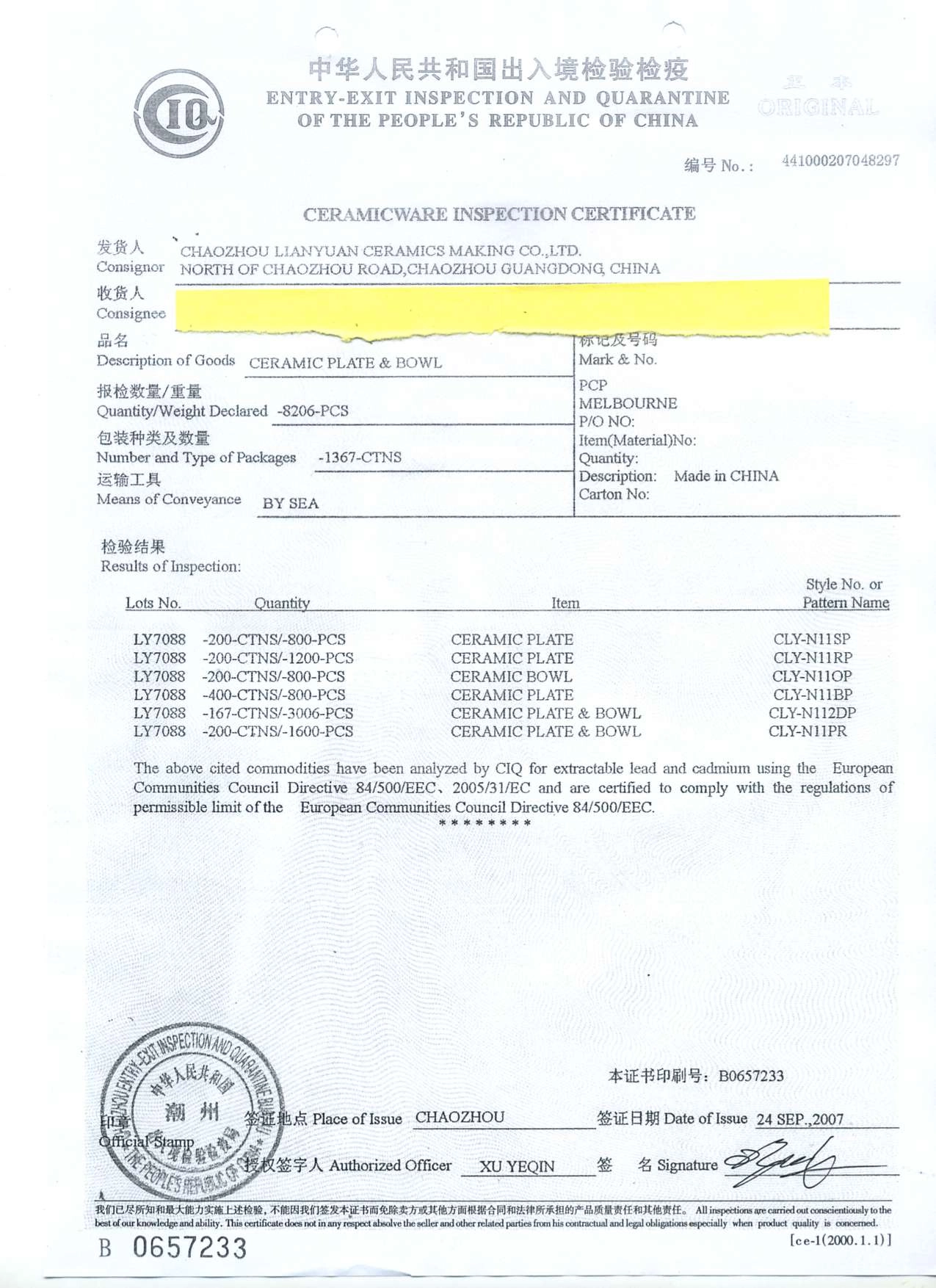
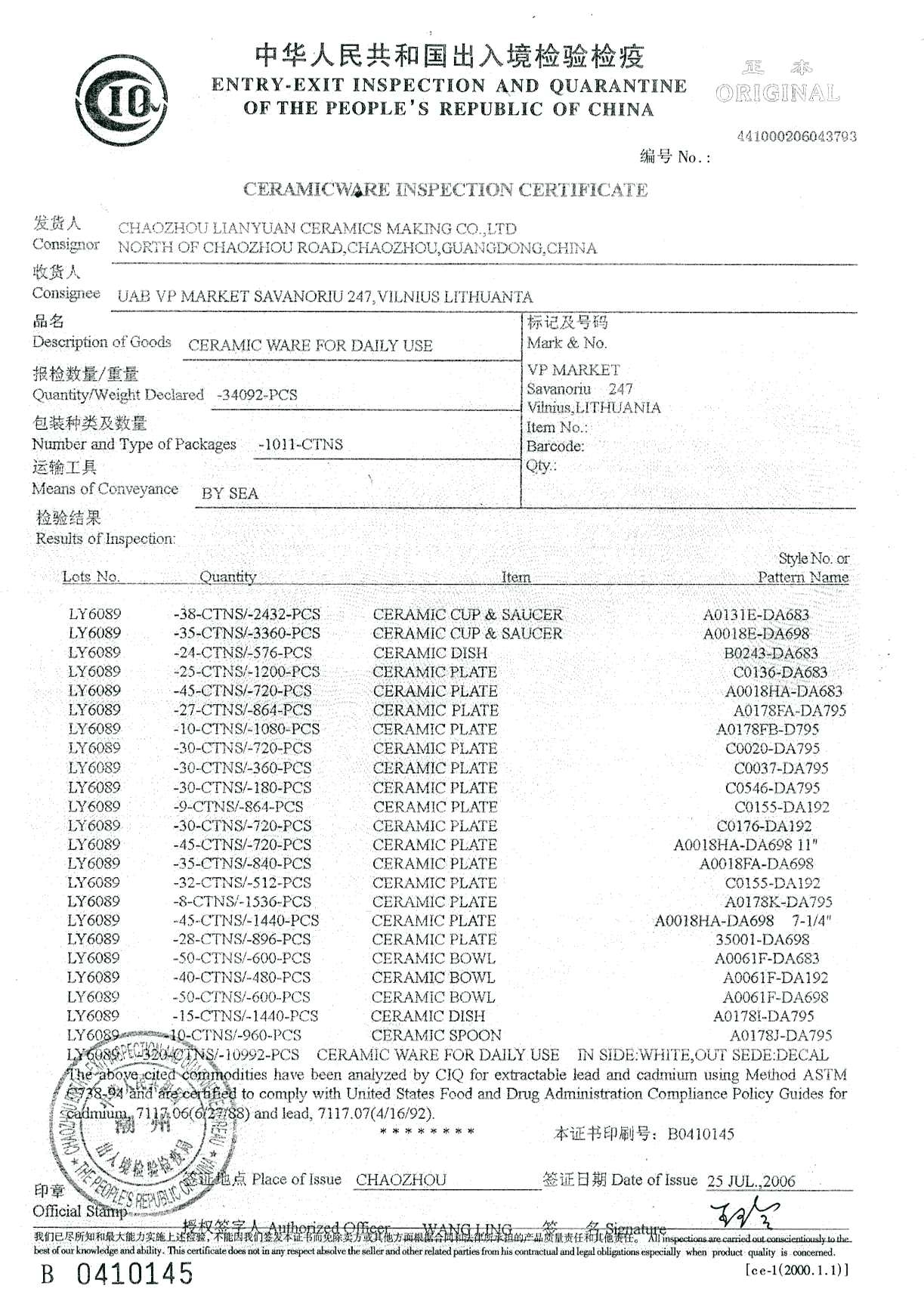
For your order, LIANYUAN CERAMICS can help review available documentation against the selected models, glaze colours, decorations, and destination market, and discuss any additional testing needs. Send your product references and market requirements so we can confirm the relevant reports and provide a wholesale or custom quotation.
How Is Testing Conducted?
Lead and cadmium migration testing generally follows four stages: sample identification, controlled exposure, laboratory analysis, and assessment against the applicable criteria.
For the EU ceramic method, a 4% acetic acid solution is used at 22 ± 2°C for 24 ± 0.5 hours. The laboratory measures the metals released into the solution. Other specifications must follow the relevant method.
Before arranging ceramic tableware migration testing, confirm:
Sample identity: Record the model, dimensions, glaze, and decoration so results can be linked to the proposed order.
Test scope: Agree the market, category, sample quantity, and applicable method with the laboratory.
Reporting: Request numerical results, units, and assessment criteria, rather than a pass statement alone.
How Do You Check a Test Report?
A ceramic tableware test report is useful only when its scope matches your purchase. Review the following before accepting lead and cadmium migration testing as evidence for an order.
| Review Item | What Buyers Should Check |
|---|---|
| Product match | Model, photographs, glaze colour and decoration match the products being ordered. |
| Method and category | The method, product classification and criteria suit the intended market. |
| Results and units | Both lead and cadmium are covered, with results and units clearly identified. |
| Laboratory details | Report number, date, authenticity, and relevant accreditation scope can be checked. |
| Coverage after changes | New materials, colours or processes have been reviewed for their effect on applicability. |
For example, a report for a plain white plate does not automatically cover the same shape with a new coloured glaze or decorated food-contact surface. Ask for documented coverage or an assessment of whether further testing is needed.
What Should You Ask Before OEM Production?
For customised ceramics collections, discuss lead and cadmium migration testing during sample development. This helps avoid discovering a documentation gap after the order has entered production.
Which products does the available evidence cover? Ask the supplier to identify the exact models and finishes, including any exclusions.
What changes require review? Include new glaze recipes, pigments, decals, and firing processes in discussions about custom ceramic tableware testing.
How will the order match the approved sample? Agree on the product specification and how material or process changes will be communicated.
Who handles testing arrangements? Confirm the laboratory, sample selection, costs, timing, and response to an unsuccessful result before proceeding.
Bring your food contact testing for ceramic dinnerware requirements into the sample discussion with LIANYUAN CERAMICS. Request confirmation of the documentation and testing arrangements available for your specific project.
How Can LIANYUAN Support Your Order?
LIANYUAN CERAMICS connects product development with manufacturing, giving buyers practical ways to address sourcing concerns:
Custom development: Translate drawings or collection ideas into shapes, sizes, colours, and decorations for OEM ceramic tableware.Custom development: Translate drawings or collection ideas into shapes, sizes, colours, and decorations for OEM ceramic tableware.



Sample approval: Review prototypes before bulk production to clarify the agreed design and finish.
Production checks: Support ceramic tableware quality control through raw-material, decoration, firing, and finished-product checks.


Coordinated collections: Develop matching tableware and packaging to reduce the coordination needed across separate suppliers.


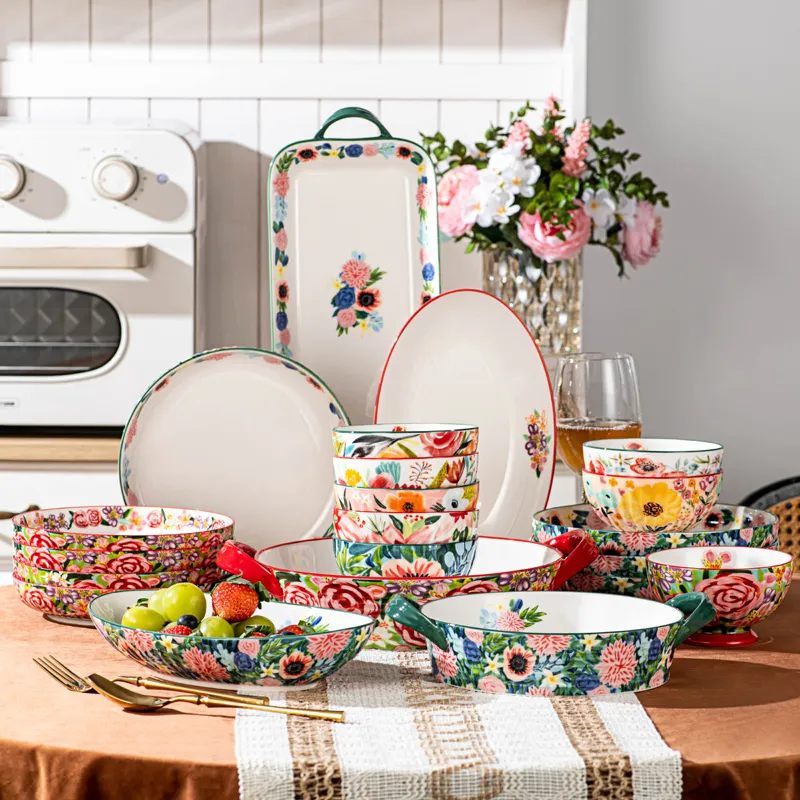
Share your proposed product list and documentation requirements so the relevant scope can be confirmed before an order is placed.
Conclusion: Start Your Tableware Project with LIANYUAN
LIANYUAN CERAMICS offers wholesale and custom tableware development, sample approval, production, and packaging services. Send your requirements for lead and cadmium migration testing with your drawings or product references, target market, preferred finishes, and estimated quantities.
Our team can discuss suitable products, custom options, and project-specific documentation needs, then prepare a quotation for your order. Contact LIANYUAN CERAMICS to request samples and a wholesale or OEM quote.