

Ceramic dinnerware packaging reduces shipping breakage by combining proper inner protection, strong outer cartons, stable product positioning, suitable packing density, and careful loading. For B2B buyers, the most effective approach is to control movement inside the carton, protect fragile edges and handles, match carton strength to shipment weight, and confirm packaging standards before bulk shipping.
As a ceramic tableware supplier, Lianyuan works with B2B buyers to clarify product specifications, set composition, order quantities, shipping methods, and packaging requirements before bulk production. Clear packaging standards help reduce breakage, replacement costs, delivery risks, and later disputes during long-distance transportation.
Why Ceramic Dinnerware Breaks During Shipping
Ceramic dinnerware is rigid but brittle. During international shipping, damage may result from repeated vibration, carton drops, compression during stacking, product movement inside the box, or direct contact between ceramic pieces. For bulk buyers, the key is to identify the source of the risk rather than simply adding more packaging material. Poorly fitted packaging can still fail even when a large amount of cushioning is used.
Common shipping damage includes edge chipping on plates, broken mug handles, damaged teapot spouts or handles, cracks caused by stacking pressure, surface scratches between ceramic pieces, and breakage caused by excessive space inside cartons. Poorly fitted packaging can still fail even when a large amount of cushioning material is used.
Build Protection from the Inside Out
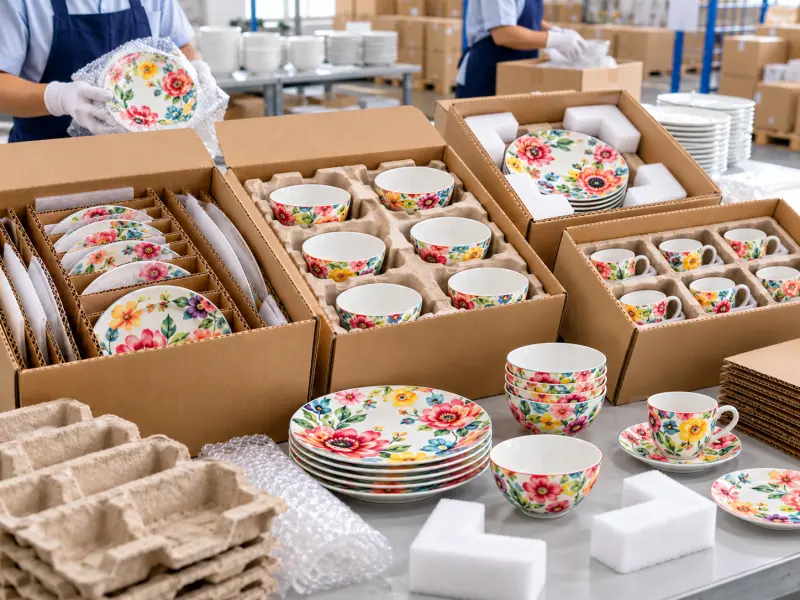
A reliable ceramic dinnerware packaging for shipping structure should begin with the individual product and then extend outward to the inner box and master carton. The purpose of inner packaging is to prevent ceramic-to-ceramic contact and reduce movement during handling and transportation. Common methods may include paper separation, cardboard dividers, cushioning materials, inserts, and protective wrapping. A suitable structure should keep each product stable while avoiding excessive space inside the carton.
Different Products Need Different Packaging
One packaging structure cannot be applied to every ceramic product. Plates, bowls, mugs, teapots, and serving pieces have different weak points and therefore require different protection priorities. For wholesale tea sets, bulk tea sets, and custom tea sets, buyers should pay particular attention to cups, saucers, teapot handles, and spouts because multiple fragile components are often packed together in one set.
| Product | Main Shipping Risk | Packaging Focus |
|---|---|---|
| Plates | Edge chipping | Rim protection and separation |
| Bowls | Pressure and collision | Stable nesting and cushioning |
| Mugs | Handle breakage | Individual compartments |
| Cups & Saucers | Surface and edge contact | Layer separation |
| Teapots | Spout and handle damage | Stable support around fragile parts |
| Serveware | Large-area stress | Reinforced support and stable positioning |
Control Packaging Strength, Movement and Loading Before Bulk Shipping
For ceramic dinnerware packaging, reducing breakage requires more than strong inner protection. Outer carton strength, carton size, product positioning, weight distribution, and packing density should all match the actual shipping conditions. For wholesale dinnerware sets containing plates, bowls, mugs, or multiple SKUs, oversized cartons, excessive space, weak separation, or unbalanced weight can increase movement and collision risk during long-distance transportation.
Before bulk shipping, buyers should also consider whether the packaging needs to be validated through trial packing, sample shipment, drop testing, compression testing, or other suitable methods. Palletizing and container loading are equally important, because poor stacking, uneven weight distribution, excessive gaps, or moisture exposure can still lead to breakage even when the carton itself is well designed. A practical principle is: Stable Cartons + Balanced Weight + Limited Movement.
When sourcing from Lianyuan, B2B buyers can provide product specifications, set combinations, carton requirements, shipping methods, and loading expectations during the quotation or sampling stage. Clarifying these details before bulk production helps both sides establish clearer packaging standards and reduce the risk of breakage, rework, replacement, and shipping disputes later in the order process.
Packaging Should Match the Sales Channel
Different B2B buyers require different packaging priorities. A distributor, retail brand, hotel project, and e-commerce seller may purchase similar ceramic products but need very different packing structures. For private-label or customized projects, retail boxes, labels, barcodes, and presentation packaging may also need to be discussed together with the product order. The key is to avoid treating packaging as an afterthought. Packaging should be planned together with product specifications, sales channels, and shipping methods.
| Buyer Type | Main Packaging Priority |
|---|---|
| Wholesaler | Shipping efficiency and low breakage |
| Retail Brand | Product protection and branded presentation |
| E-commerce Seller | Individual protection and parcel resistance |
| Hotel Project | Efficient bulk packing and easy unpacking |
| Gift Market | Premium appearance and product protection |
Confirm Packaging Standards Before Bulk Ordering
For B2B buyers, confirm ceramic dinnerware packaging along with product specifications before mass production. Product type, set composition, carton requirements, shipping method, and sales channel all affect how you define the final packaging standard.
Clear packaging requirements can help reduce breakage risk, avoid communication errors, and make later inspection, shipment, and repeat orders easier to manage. For buyers sourcing ceramic tableware from Lianyuan, these requirements can be discussed together with the order details before moving into bulk production.
How to Evaluate a Supplier’s Packaging Capability
When evaluating a dinnerware manufacturer or ceramic tableware supplier, B2B buyers should look beyond the product itself and consider whether packaging requirements can be clearly discussed, confirmed, and carried through before shipment. For bulk ceramic tableware orders, carton quantities, inner protection, labels, shipping marks, and retail or export packaging requirements should all be aligned with the order specifications.
This is also where supplier coordination becomes important. For buyers working with Lianyuan, product specifications, packaging requirements, branding needs, and bulk-order details can be discussed together before production, creating a clearer foundation for inspection, shipment, and repeat orders.
Discuss Your Export Packaging Requirements with Lianyuan
Packaging Requirements Confirmed Before Bulk Production:
Buyers can discuss inner protection, carton specifications, packing quantities, shipping marks, and retail packaging requirements during the quotation or sampling stage. Confirming these details early helps reduce changes after mass production begins.


Clear Packaging Standards for Bulk Orders:
For wholesale dinnerware sets and customized ceramic collections, clearly defined packaging specifications provide a more consistent basis for inspection, shipment, and repeat orders.
Better Coordination for Multi-SKU Orders:
When one project includes plates, bowls, mugs, tea sets, or other multiple SKUs, confirming product grouping and packing requirements in advance helps simplify later order management and replenishment.


Packaging Details Aligned with the Order:
Packaging requirements can be discussed together with product specifications, order quantity, sales channel, and shipping method, helping buyers establish a clearer packing plan before production.

Conclusion: Reduce Breakage by Planning the Whole Packaging System
Lianyuan supports B2B buyers with ceramic dinnerware, tea sets, and customized tableware for wholesale, retail, hospitality, and private-label projects. Product specifications, set composition, branding, packaging requirements, and bulk-order details can be discussed together before production, helping buyers build a clearer and more manageable sourcing plan.
For buyers sourcing wholesale dinnerware sets or customized ceramic collections, Lianyuan combines product development, OEM/ODM support, multi-SKU coordination, and bulk-order communication to make project execution more efficient from sampling to shipment.
Send Lianyuan your product type, set composition, target quantity, design reference, packaging requirements, and shipping needs. We can review your project requirements and prepare a suitable bulk quotation.