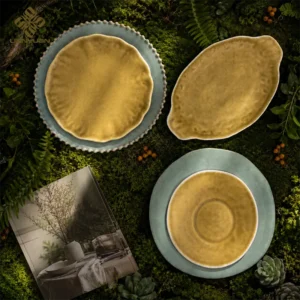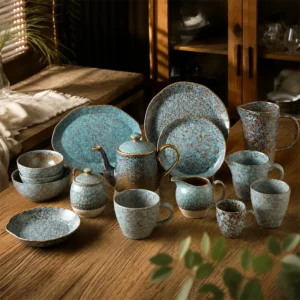


Importation vaisselle en céramique Cela ne se limite pas au choix de designs attrayants et de prix compétitifs. Pour les distributeurs, les détaillants, les fournisseurs du secteur hôtelier et les propriétaires de marques, il est essentiel de garantir le respect des réglementations en matière de sécurité alimentaire afin d'éviter les retards douaniers, les rappels de produits et les risques pour la réputation. Savoir quelles certifications et quels rapports d'essai sont exigés sur les différents marchés peut aider les acheteurs à s'approvisionner en toute confiance et à protéger leur entreprise.
Pourquoi la certification de la vaisselle en céramique est-elle importante ?
Avant de passer une commande en gros, les importateurs doivent s'assurer que les produits en céramique sont conformes à la réglementation relative au contact alimentaire en vigueur sur leurs marchés cibles. Les glaçures et les pigments décoratifs utilisés en céramique peuvent contenir des traces de métaux lourds tels que le plomb et le cadmium. Si les concentrations de ces substances dépassent les limites réglementaires, elles peuvent migrer dans les aliments et les boissons, ce qui peut entraîner des risques pour la santé et des problèmes de conformité.
- Respecter les exigences réglementaires locales
- Réduire les risques liés au dédouanement
- Protéger la réputation de la marque
- Garantir la sécurité des consommateurs
- Vérifier la sécurité des couleurs personnalisées, des autocollants et des glaçures
Pour les entreprises qui s'approvisionnent en vaisselle en céramique en gros, le respect des normes doit être considéré comme tout aussi important que la conception des produits, les prix et les délais de livraison.
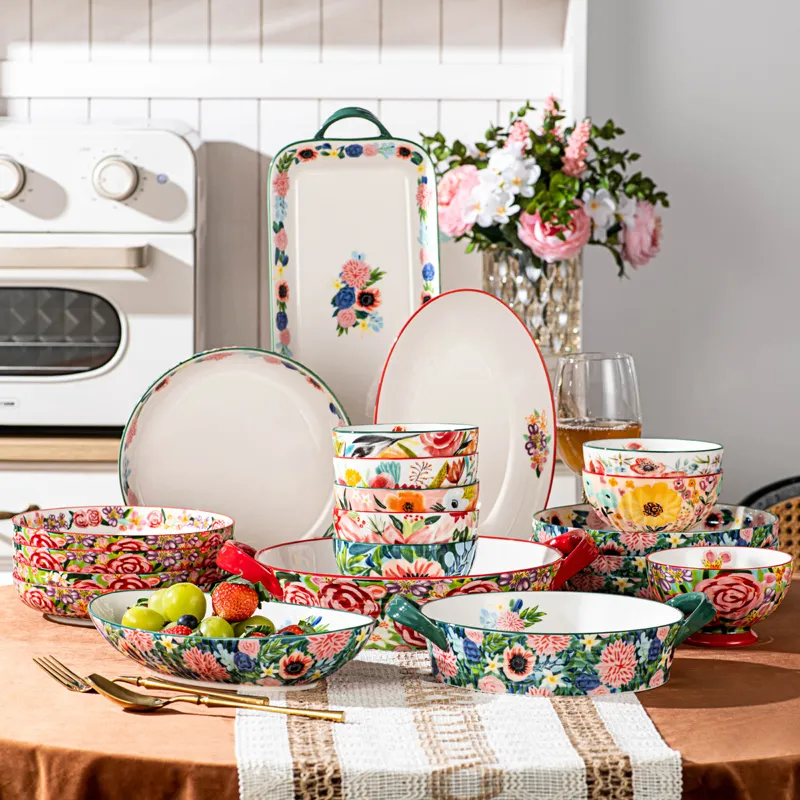

Certifications essentielles requises pour la conformité des importations de vaisselle en céramique
Certification FDA pour les États-Unis
Pour la vaisselle en céramique destinée au marché américain, la conformité aux normes de la FDA est l'une des exigences les plus fréquemment requises.
- Tests de migration du plomb
- Essais de migration du cadmium
- Évaluation de la sécurité des matériaux destinés à entrer en contact avec les denrées alimentaires
Les réglementations applicables comprennent le titre 21 du Code des règlements fédéraux (21 CFR) de la FDA et les guides de conformité. De nombreux acheteurs exigent également des tests au titre de la Proposition 65 de Californie en raison de limites plus strictes.
Proposition 65 de Californie (Prop 65)
La proposition 65 porte principalement sur les substances associées au cancer, aux malformations congénitales ou aux troubles de la reproduction. En ce qui concerne les produits en céramique, le plomb et le cadmium constituent les principales préoccupations. Les acheteurs doivent demander à consulter les rapports d'essais de la FDA et ceux relatifs à la proposition 65.
Certification LFGB pour l'Allemagne et les marchés européens haut de gamme
La norme LFGB est une norme reconnue en Europe en matière de contact alimentaire, en particulier en Allemagne. De nombreux détaillants européens exigent des produits certifiés conformes à la norme LFGB, car celle-ci est plus stricte que la réglementation générale de l'UE.
- Migration des métaux lourds
- Sécurité alimentaire
- Analyses sensorielles
- Rejets de plomb et de cadmium
Conformité aux réglementations européennes en matière de contact alimentaire
La vaisselle en céramique vendue dans l'Union européenne doit être conforme au règlement (CE) n° 1935/2004 et à la directive 84/500/CEE. Les essais portent principalement sur la libération de plomb et de cadmium ainsi que sur la sécurité générale en matière de contact alimentaire.
Analyses effectuées par des laboratoires indépendants
Les acheteurs internationaux peuvent demander à des laboratoires reconnus, tels que SGS, Intertek, TÜV Rheinland ou Bureau Veritas, de réaliser des tests afin de vérifier la conformité de manière indépendante.

Exigences en matière de certification des articles de vaisselle en céramique par marché
| Marché | Principales exigences en matière de conformité |
|---|---|
| États-Unis | FDA + Proposition 65 |
| Union européenne | CE 1935/2004 + 84/500/CEE |
| Allemagne | LFGB |
| Royaume-Uni | Réglementation britannique relative aux matériaux et objets destinés à entrer en contact avec les denrées alimentaires |
| Canada | Tests de sécurité relatifs au contact alimentaire |
| Australie | AS 2070 |
| Japon | Loi sur l'hygiène alimentaire |
Quels sont les critères de contrôle qui importent le plus aux importateurs ?
Tests de migration du plomb
Les produits à haut risque comprennent les glaçures peintes à la main, métalliques, réactives et de couleur foncée.
Essais de migration du cadmium
Les pigments décoratifs vifs, tels que le rouge, l'orange et le jaune, doivent faire l'objet de tests rigoureux visant à détecter la présence de cadmium.
Consignes de sécurité pour le micro-ondes et le lave-vaisselle
De nombreux acheteurs exigent des tests de performance afin de s'assurer que les produits peuvent être utilisés au micro-ondes et au lave-vaisselle.
Résistance aux chocs thermiques
Ces essais permettent d'évaluer la résistance des céramiques aux variations rapides de température, ce qui permet de réduire les risques de casse et d'améliorer leur durabilité.
Risques courants liés à la conformité lors de l'importation de vaisselle en céramique
- Il arrive que des échantillons de pré-production soient acceptés alors que les articles produits en série ne le sont pas
- Les variations au niveau des fournisseurs de glaçures, des températures de cuisson et des lots de pigments
- Procédures de contrôle qualité incohérentes
Les importateurs expérimentés exigent souvent des essais de pré-production, un suivi des lots et des inspections avant expédition.
Comment choisir un fabricant fiable de vaisselle en céramique ?
Ne vous arrêtez pas au prix et au design. A fabricant certifié de vaisselle en céramique devrait :
- Comprendre les exigences réglementaires sur l'ensemble des marchés
- Fournir des rapports d'essais valides réalisés par des organismes indépendants
- Contrôler l'approvisionnement en glaçures et en pigments
- Garantir la cohérence d'un lot à l'autre
- Prendre en charge les essais d'échantillons avant la production
- Effectuer des contrôles qualité avant l'expédition
- Nous proposons des services de personnalisation OEM et ODM
Pourquoi les acheteurs internationaux choisissent-ils de s'associer à Lianyuan ?
En tant que fabricant leader de vaisselle en céramique, Lianyuan propose :
- Fabrication de vaisselle en céramique conforme aux normes de la FDA
- Développement de produits certifiés LFGB
- Maîtrise des risques liés au plomb et au cadmium
- Coopération avec des laboratoires tiers
- Personnalisation OEM et ODM
- Contrôle qualité avant expédition
- Solutions d'emballage pour l'exportation
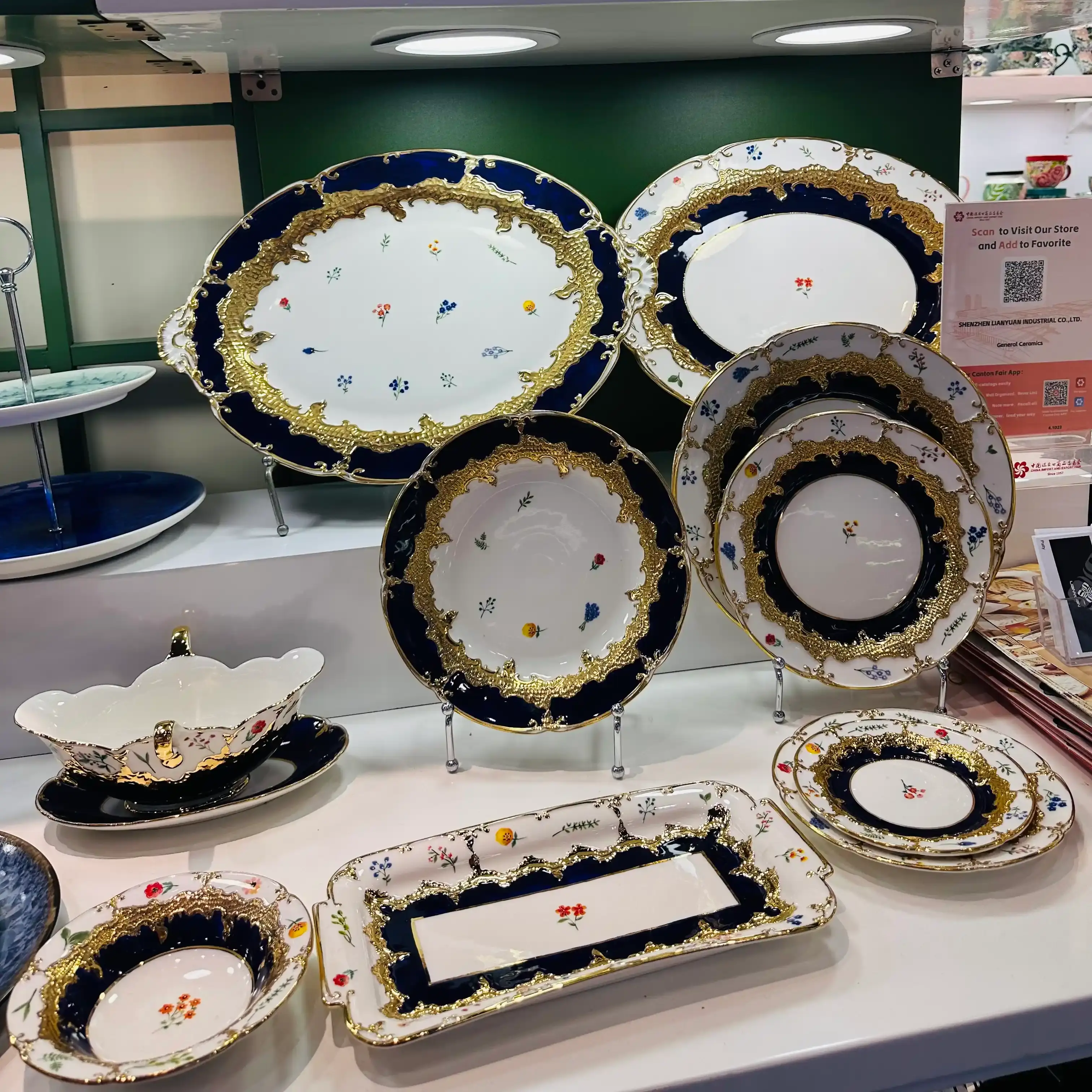
En combinant expertise en matière de conformité, de contrôle qualité et de conception, Lianyuan Ceramic aide les acheteurs à réduire les risques liés à l'approvisionnement et à rationaliser leurs achats à l'international.
Conclusion
Il est essentiel de bien comprendre les réglementations de la FDA, de la Proposition 65, de la LFGB et de l'UE en matière de contact alimentaire lors de l'importation de vaisselle en céramique. Faites appel à fournisseurs expérimentés de vaisselle en céramique et demander les rapports d'essai appropriés afin de garantir une mise sur le marché sans heurts. Contacter Lianyuan pour discuter de votre projet de vaisselle en céramique en gros ou sur mesure.