

Pour les acheteurs B2B, ceramic dinnerware packaging directly affects shipping loss, replacement costs, delivery schedules, and customer satisfaction. When sourcing ensembles de vaisselle en gros, a low product price can quickly lose its advantage if plates, bowls, mugs, or tea sets arrive damaged after long-distance transportation.
Effective ceramic dinnerware export packaging is therefore not simply about adding more foam or using a thicker carton. Buyers need to consider product structure, inner protection, carton strength, packing density, shipping method, and loading conditions as one complete system.
Why Ceramic Dinnerware Breaks During Shipping
Ceramic dinnerware is rigid but brittle. During international shipping, damage may result from repeated vibration, carton drops, compression during stacking, product movement inside the box, or direct contact between ceramic pieces. For bulk buyers, the key is to identify where the risk comes from rather than simply increasing packaging material. Poorly fitted packaging can still fail even when a large amount of cushioning is used.
Common shipping risks include:
- Edge chipping on plates
- Handle breakage on mugs
- Spout or handle damage on teapots
- Cracks caused by stacking pressure
- Surface scratching between pieces
- Breakage caused by space inside cartons
Build Protection from the Inside Out
A reliable ceramic dinnerware packaging for shipping structure should begin with the individual product and then extend outward to the inner box and master carton. The purpose of inner packaging is to prevent ceramic-to-ceramic contact and reduce movement during handling and transportation. Common methods may include paper separation, cardboard dividers, cushioning materials, inserts, and protective wrapping. A suitable structure should keep each product stable while avoiding excessive space inside the carton.
Different Products Need Different Packaging
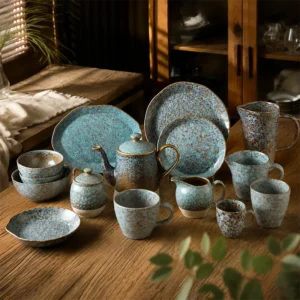
One packaging structure cannot be applied to every ceramic product. Plates, bowls, mugs, teapots, and serving pieces have different weak points and therefore require different protection priorities. For services à thé en gros, bulk tea sets, and custom tea sets, buyers should pay particular attention to cups, saucers, teapot handles, and spouts because multiple fragile components are often packed together in one set.
| Product | Main Shipping Risk | Packaging Focus |
|---|---|---|
| Plaques | Edge chipping | Rim protection and separation |
| Bols | Pressure and collision | Stable nesting and cushioning |
| Mugs | Handle breakage | Individual compartments |
| Cups & Saucers | Surface and edge contact | Layer separation |
| Teapots | Spout and handle damage | Stable support around fragile parts |
| Couverts de service | Large-area stress | Reinforced support and stable positioning |
Outer Carton Strength Must Match the Shipment
Strong inner packaging can still fail if the outer carton cannot withstand stacking pressure or repeated handling. For ceramic tableware export packaging, carton specifications should be selected according to product weight, carton size, stacking height, and transportation method. The goal is not simply to use the thickest carton, but to match the packaging structure to the actual shipping environment.
Factors buyers may need to confirm include:
- Corrugated carton structure
- Carton compression strength
- Total carton weight
- Carton dimensions
- Moisture resistance
- Packing quantity per carton
Reduce Movement Inside the Carton
One of the most common causes of ceramic breakage is uncontrolled movement inside the carton. When wholesale dinnerware sets contain different SKUs such as plates, bowls, and mugs, uneven weight distribution or oversized cartons can increase collision risk.
Buyers should pay attention to:
- Proper carton size
- Stable product positioning
- Balanced weight distribution
- Separation between different pieces
- Sufficient filling of empty spaces
Test Packaging Before Bulk Shipping
Packaging that looks secure is not always suitable for long-distance shipping. Before mass shipment, buyers can discuss whether packaging validation is required for the specific project.
Possible validation methods may include:
- Drop testing
- Compression testing
- Vibration simulation
- Trial packing
- Sample shipment
The purpose is not to add unnecessary procedures, but to identify weak points before a full shipment leaves the factory. For B2B buyers, confirming packaging standards during the sampling or pre-production stage can also reduce later disputes over shipping damage.
Palletizing and Container Loading Also Matter
Good product packaging does not eliminate all transport risk. Carton stacking and container loading can also affect the final breakage rate. For ceramic dinnerware bulk shipping, buyers should pay attention to carton stacking direction, weight distribution, excessive gaps between cartons, and moisture conditions during transportation.
A practical loading principle is: Stable Cartons + Balanced Weight + Limited Movement
Heavy cartons should normally be positioned where they do not place excessive pressure on weaker packages, and unnecessary container gaps should be controlled to reduce movement during sea freight.
Packaging Should Match the Sales Channel
Different B2B buyers require different packaging priorities. A distributor, retail brand, hotel project, and e-commerce seller may purchase similar ceramic products but need very different packing structures. For private-label or customized projects, retail boxes, labels, barcodes, and presentation packaging may also need to be discussed together with the product order. The key is to avoid treating packaging as an afterthought. Packaging should be planned together with product specifications, sales channels, and shipping methods.
| Type d'acheteur | Main Packaging Priority |
|---|---|
| Wholesaler | Shipping efficiency and low breakage |
| Retail Brand | Product protection and branded presentation |
| Vendeur en ligne | Individual protection and parcel resistance |
| Hotel Project | Efficient bulk packing and easy unpacking |
| Gift Market | Premium appearance and product protection |
What B2B Buyers Should Confirm Before Ordering
Before placing a bulk ceramic tableware order, buyers should define packaging requirements clearly in the RFQ or purchase specification.
Packaging Information to Confirm
- Product type
- Composition de l'ensemble
- Quantity per carton
- Carton dimensions
- Carton weight
- Inner packing method
- Outer carton requirements
- Retail packaging requirements
- Shipping marks
- Barcode/label requirements
- Pallet requirements
- Shipping method
This information allows the ceramic tableware supplier to understand the complete project rather than quoting only the ceramic products themselves.
How to Evaluate a Supplier’s Packaging Capability
When evaluating a dinnerware manufacturer or ceramic tableware factory, B2B buyers should look beyond the product itself and confirm how packaging requirements are managed before shipment. Key points include whether packaging can be adjusted for different product types, whether packing specifications can be confirmed before mass production, and whether retail packaging and export packaging can be planned separately.
A reliable ceramic tableware supplier should also be able to keep packaging standards clear across repeat orders, including carton quantities, inner protection, labels, shipping marks, and other agreed details. Clear packaging communication before production helps reduce misunderstandings and makes later inspection, shipping, and replenishment easier to manage.
Discuss Your Export Packaging Requirements with Lianyuan
Packaging Requirements Confirmed Early
Buyers can discuss packaging details during the quotation or sampling stage, confirming inner protection, carton specifications, packing quantities, shipping marks, and retail packaging requirements before bulk production.


Clear Standards for Bulk Orders
For wholesale dinnerware sets and customized ceramic collections, confirming packaging standards in advance reduces communication errors and gives buyers clear references for inspection, shipping, and repeat orders.
Support for Multi-SKU Projects
When multiple SKUs are included in one project, early coordination of product grouping and packing requirements can make later order management and replenishment more efficient.


Packaging Requirements Discussed Around the Order
Packaging requirements can be discussed together with product specifications and shipping conditions, helping buyers clarify key packing details before bulk production.
Conclusion: Reduce Breakage by Planning the Whole Packaging System
Effective ceramic dinnerware export packaging is not about adding more packaging material. It is about building a complete system around product structure, inner protection, carton strength, packing density, testing requirements, loading conditions, and the final sales channel.
For B2B buyers, confirming these details before mass production can help reduce shipping loss, avoid unnecessary replacement costs, and create clearer quality and packaging standards between buyer and supplier.
If you are sourcing wholesale dinnerware sets, tea sets, or customized ceramic tableware, envoyer à Lianyuan your product type, set composition, order quantity, shipping method, and packaging requirements. We can discuss the project details with you before preparing the bulk quotation.