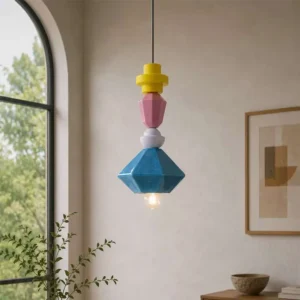


Choosing between porcelain, stoneware, and bone china depends on your target market, product positioning, and purchasing requirements. Stoneware is often preferred for its natural textures and decorative glazes; porcelain offers versatility for everyday and commercial dining, while bone china is valued for its lightweight, translucent, and refined appearance.
For importers, wholesalers, and private-label brands, the decision involves more than aesthetics. Durability, product weight, cost, decoration options, and production consistency all influence the success of a dinnerware collection.
As an experienced ceramic tableware manufacturer, Lianyuan supplies and customizes different ceramic materials for global B2B buyers. This porcelain vs stoneware vs bone china guide compares their key characteristics and explains how to choose the right material for wholesale purchasing.
What Are Stoneware, Porcelain, and Bone China?
Although stoneware, porcelain, and bone china are all ceramic materials, their differences extend beyond appearance. Each offers distinctive advantages in surface finish, product weight, decoration possibilities, and market positioning. Understanding these differences helps wholesale buyers select materials that match their product collections and customers’ expectations.
Stoneware: Natural Textures and Distinctive Glaze Effects
Stoneware is a dense ceramic material typically fired at high temperatures. Lianyuan’s stoneware is fired at approximately 1200–1300°C, with a stated water absorption rate below 1%, making it suitable for everyday dinnerware and decorative tableware collections.
Its key advantages include:
- Dense Structure and Substantial Feel: High-temperature firing creates a compact ceramic body with low water absorption. Stoneware can offer a solid, substantial feel, making it attractive for dinnerware collections that emphasize material texture and everyday practicality.
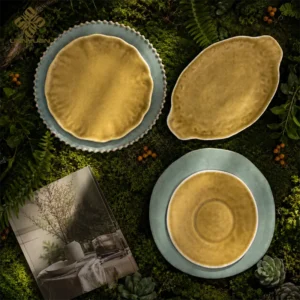
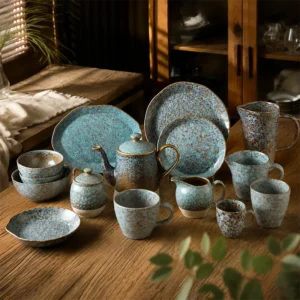
- Rich Reactive Glaze and Matte Finishes: Stoneware works well with reactive glazes, matte surfaces, and textured effects. These finishes create natural color variations, layered tones, and distinctive patterns that give products a more handcrafted appearance.
- Distinctive Product Identity: Organic textures, earthy colors, and glaze variations help brands develop recognizable dinnerware collections. This is especially valuable for homeware retailers and lifestyle brands that want products to stand out from conventional glossy dinnerware.
Lianyuan’s custom stoneware dinnerware supports different glaze finishes, shapes, and decorative designs for wholesale and private-label collections.
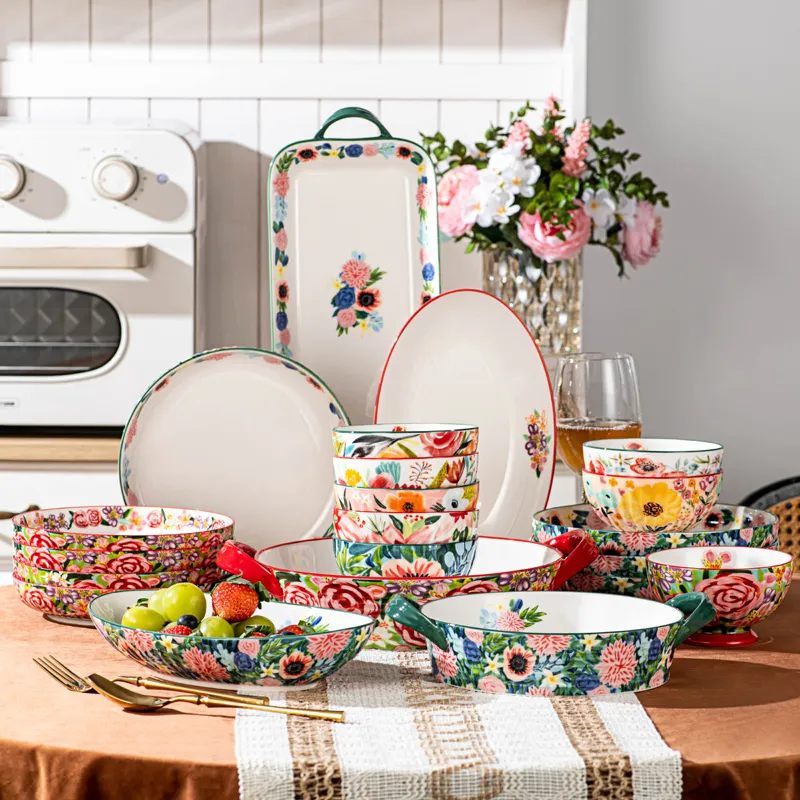

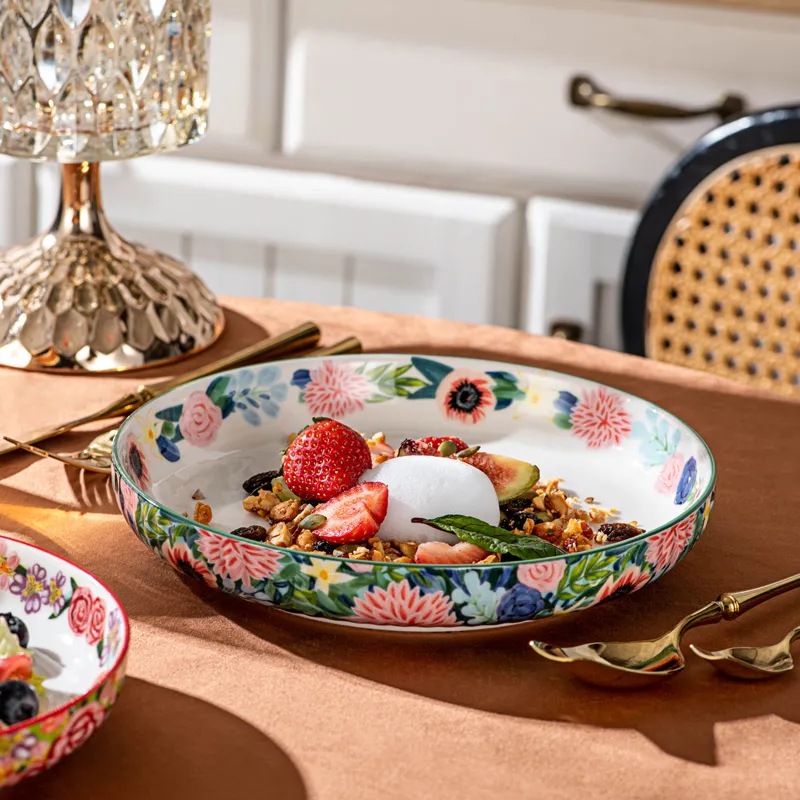
Porcelain: Smooth Finish and Versatile Everyday Performance
Porcelain is manufactured from refined ceramic materials and fired at high temperatures, typically around 1200–1400°C in Lianyuan’s production range. Its dense structure and smooth glazed surface make it suitable for a wide range of everyday and commercial tableware.
Its key advantages include:
- Smooth, Refined Surface: Porcelain provides a clean, polished appearance with a fine glazed finish. Its smooth surface is easy to clean and helps resist everyday staining, making it suitable for frequently used plates, bowls, and serving dishes.
- Practical Strength for Daily Use: Properly manufactured porcelain offers good strength and resistance to everyday wear. Its practical performance makes it a suitable choice for household dinnerware and commercial dining applications where frequent handling is expected.
- Flexible Shapes and Coordinated Collections: Porcelain can be produced in different shapes, sizes, colors, and decorative styles. Its versatile appearance makes it easier for brands to develop matching dinnerware sets, tea collections, and serving pieces for different market segments.
Lianyuan’s porcelain dinnerware manufacturing supports customized product designs, colors, logos, and packaging, helping wholesalers and brands build coordinated product ranges.
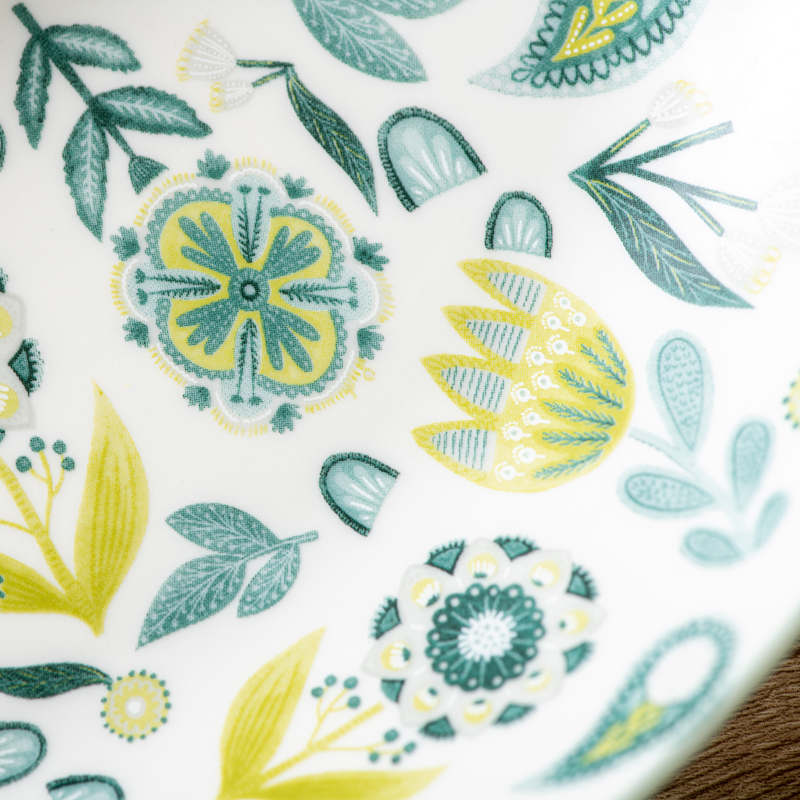
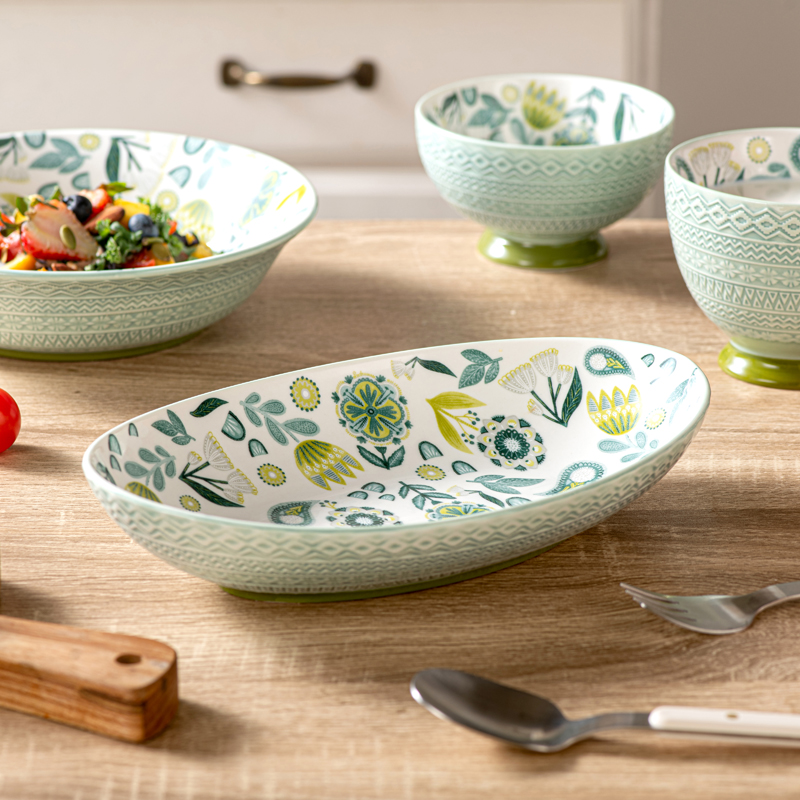

Bone China: Lightweight Elegance and Premium Presentation
Bone China is traditionally made from bone ash, kaolin, and feldspar. Lianyuan’s bone china formulations can contain up to 45% bone ash, contributing to the material’s characteristic translucency, refined appearance, and strength.
Its key advantages include:
- Distinctive Translucency: Bone china allows light to pass through thin sections of the ceramic body, creating a delicate, luminous appearance. This visual characteristic distinguishes it from most conventional stoneware and porcelain dinnerware.
- Lightweight Yet Strong: Bone china can be manufactured with relatively thin walls while maintaining good strength. Its lighter feel and fine structure create a more refined dining experience without automatically sacrificing everyday functionality.
- Premium Visual and Brand Appeal: Its smooth, glossy finish, elegant white appearance, and compatibility with intricate decorative patterns make bone china particularly suitable for premium dinnerware, fine tea sets, luxury hospitality, and gift collections.
Lianyuan’s custom bone china dinnerware combines specialized manufacturing with mold and design development to help brands create distinctive high-end tableware collections.


Porcelain vs Stoneware vs Bone China: Key Differences
For wholesale buyers, a material comparison should consider product performance, visual appeal, and commercial positioning rather than assuming one ceramic type is always better.
| Comparison | Stoneware | Porcelain | Bone China |
|---|---|---|---|
| Appearance | Earthy textures, matte or reactive glazes | Smooth, refined, often glossy | Delicate, smooth, translucent |
| Weight and thickness | Often substantial, depending on design | Available in different thicknesses | Often relatively lightweight |
| Durability | Suitable for daily use with proper production | Suitable for everyday and commercial use | Can offer good strength despite thinner walls |
| Decoration | Reactive glazes, matte finishes, distinctive textures | Decals, colors, patterns, various finishes | Fine patterns and elegant decorations |
| Price positioning | Mid-range to premium | Economy to premium | Typically premium |
| Common markets | Lifestyle retail, design-led collections | Household retail, hospitality, wholesale | Premium retail, hotels, gift collections |
Which Material Is More Durable?
There is no universal winner. Stoneware vs porcelain durability depends on the ceramic formulation, firing quality, product thickness, and design. Bone china should not automatically be considered fragile simply because it is thinner or lighter.
For commercial orders, buyers should compare actual samples for rim chipping, surface wear, stackability, and repeated washing performance instead of relying only on material names.
Which Material Costs More?
Bone china is commonly positioned in the premium segment, while porcelain and stoneware can cover broader price ranges. However, the final wholesale dinnerware cost also depends on product dimensions, decoration complexity, glaze effects, order quantity, and packaging requirements.
A detailed quotation based on the same product specifications is more useful than comparing material prices alone.
Which Dinnerware Material Is Best for Your Business?
When comparing porcelain vs stoneware vs bone china for wholesale purchasing, the best choice depends on your target customers, sales channels, and product positioning.
Homeware Retailers: Stoneware for Distinctive Collections
For lifestyle retailers and homeware brands, stoneware provides opportunities to develop visually recognizable collections. Reactive glazes, matte textures, and natural color variations can help products stand out in stores and online catalogs.
Stoneware is particularly worth considering when a brand’s selling point is design, texture, or a coordinated table setting rather than a conventional white dinnerware range.
Wholesalers and Hospitality Buyers: Porcelain for Versatility
For distributors supplying everyday tableware or hospitality projects, porcelain is a practical option because it supports a wide range of shapes, finishes, and product specifications.
For hotels and restaurants, buyers should pay particular attention to stackability, replacement availability, cleaning requirements, and the consistency of repeat orders. These purchasing factors can be more important than the material’s visual appearance alone.
Premium Brands: Bone China for Refined Presentation
Bone china is well suited to premium collections where elegance, lightness, and translucency contribute to the product’s perceived value.
It can be particularly attractive for fine dining, premium tea sets, gift collections, and boutique retail. However, buyers should evaluate the actual design, decoration, and product specifications to ensure the collection matches the intended market.
For buyers developing several product lines, combining different ceramic materials may be more effective than using one material across every collection.
What Should Wholesale Buyers Consider Before Ordering?
Beyond the porcelain vs stoneware vs bone china comparison, wholesale buyers should also evaluate product safety, sample consistency, MOQ, and delivery requirements.
Food Contact Safety and Product Testing
Food contact safety depends on the finished product, including its glaze formulation, pigments, decoration, and manufacturing process. None of the three ceramic materials automatically guarantees compliance.
For a more detailed explanation of lead and cadmium migration and decoration safety, read Lianyuan’s Colorful Ceramic Dinnerware Safety Guide.
Buyers should request applicable test documentation for the specific product and destination market. Microwave, oven, and dishwasher suitability should also be confirmed separately when required.
Sample Quality and Production Consistency
Before confirming a bulk order, review samples for dimensions, weight, glaze finish, color consistency, and decorative details.
For reactive-glaze products, natural color variation may be part of the intended design. Buyers should agree on an acceptable appearance range during sample approval to avoid disputes during mass production.
For porcelain and bone china collections, product dimensions, matching colors, and consistency across sets are also important, especially when repeat orders are expected.
MOQ, Packaging, and Delivery Planning
The minimum order quantity (MOQ) and production schedule may vary according to material, existing molds, new product development, and decoration requirements.
Packaging should be selected according to the product’s shape, weight, shipping method, and retail presentation needs. Buyers should also discuss repeat-order arrangements, particularly when developing long-term wholesale collections.
Why Choose Lianyuan as Your Custom Ceramic Dinnerware Manufacturer?
Choosing the right ceramic material is only one part of a successful sourcing project. Buyers also need a manufacturer capable of translating product requirements into consistent, market-ready collections. With over 30 years of manufacturing experience, Lianyuan provides multi-material ceramic production, OEM/ODM customization, and bulk supply for international buyers.
What Lianyuan Can Offer Your Business:
01 | Multiple Materials, One Manufacturing Partner
Lianyuan manufactures stoneware, porcelain, and bone china for different market segments. Its product range also includes heat-resistant ceramics for casseroles and bakeware, and Dolomite ceramics for decorative ceramic collections. Buyers can source complementary product lines through one supplier, reducing the need to coordinate multiple factories.


02 | In-House Mold Development for Exclusive Designs
With in-house mold development and design support, Lianyuan can develop custom product shapes and sizes from customer sketches, reference images, or design concepts. This enables private-label brands to create distinctive products rather than relying solely on standard factory designs.
03 | Flexible Decoration and Branding Options
From reactive glazes and in-glaze decals to hand-painted patterns and relief designs, Lianyuan provides decorative options suited to different ceramic materials and product styles. Custom colors, logos, patterns, and packaging allow buyers to build coordinated collections that reflect their brand identity.
04 | Production Control from Sampling to Bulk Delivery
Lianyuan’s manufacturing process includes material inspection, forming, decoration, kiln firing, finished-product inspection, and packaging checks. Sample approval helps customers confirm product specifications and finishes before mass production, while automated production equipment supports consistent manufacturing for wholesale ceramic dinnerware orders.
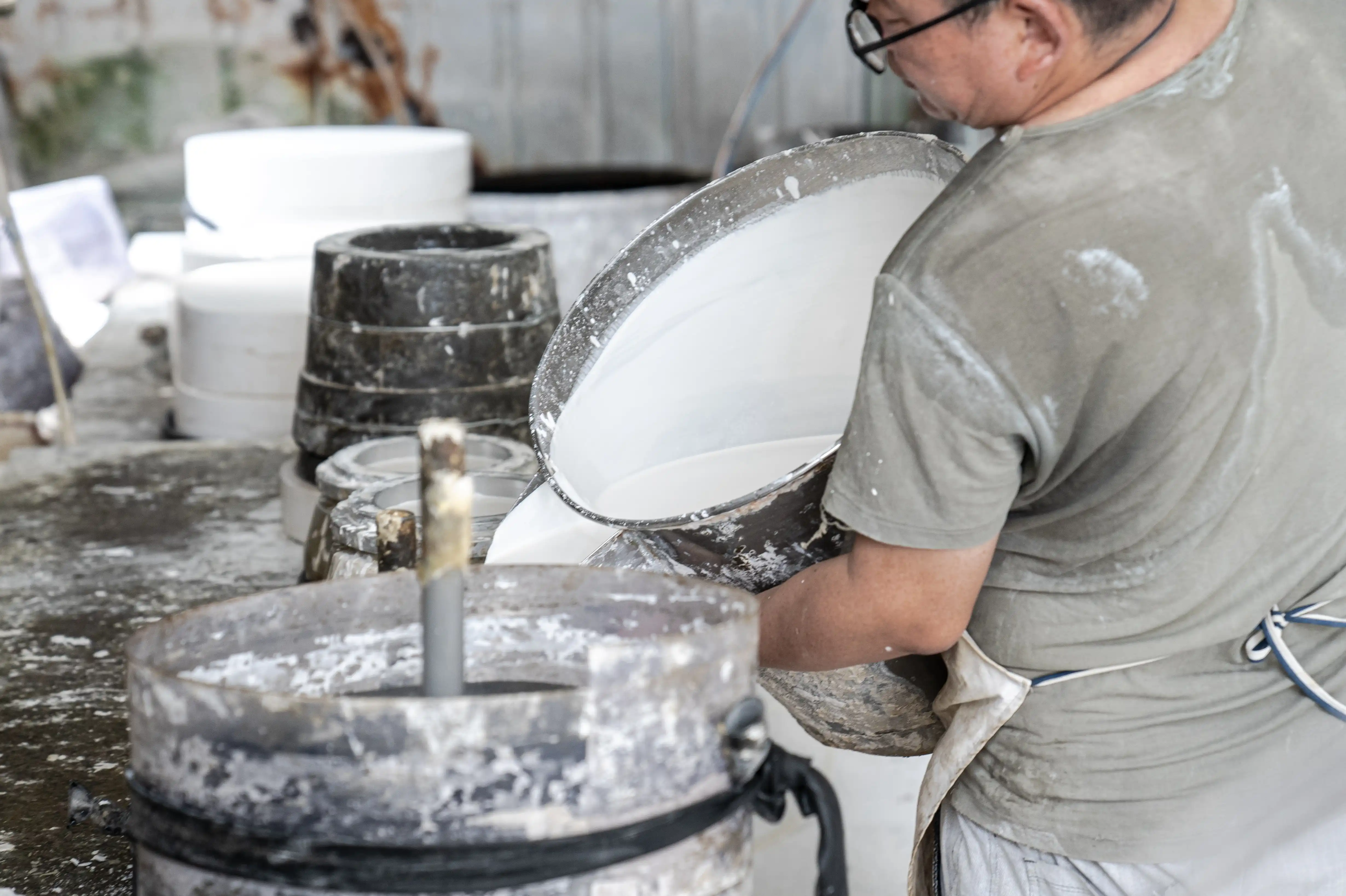
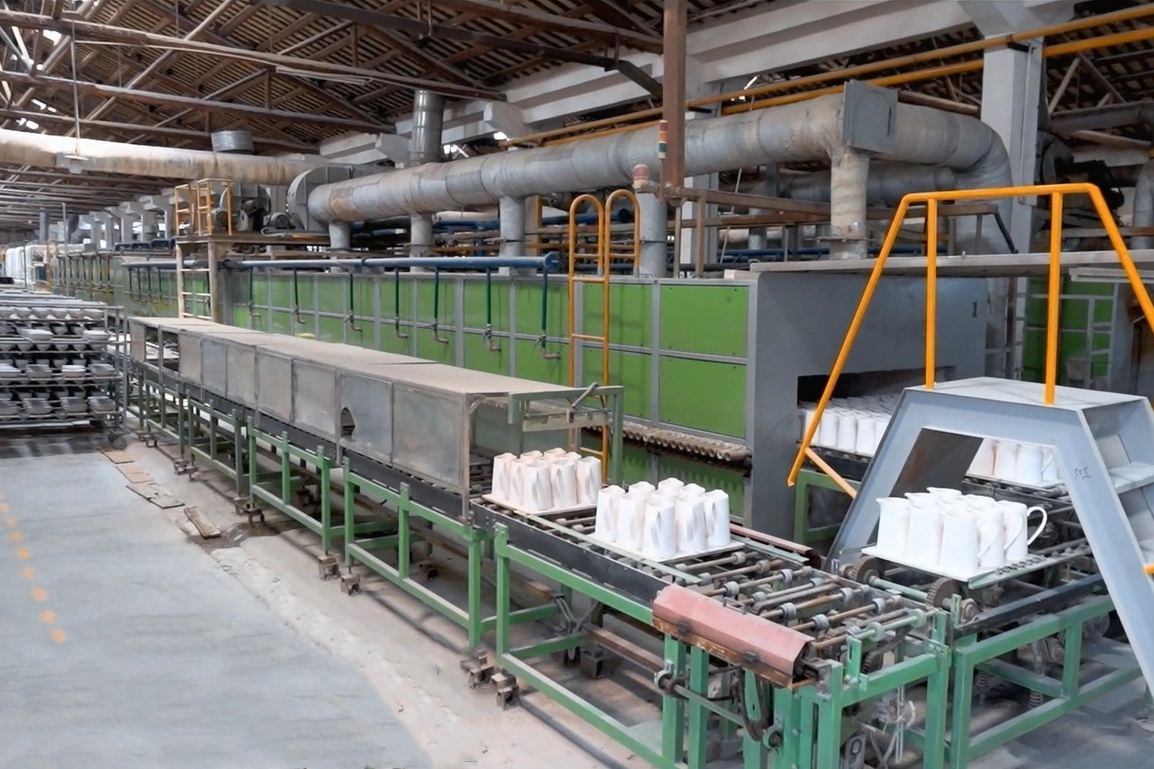
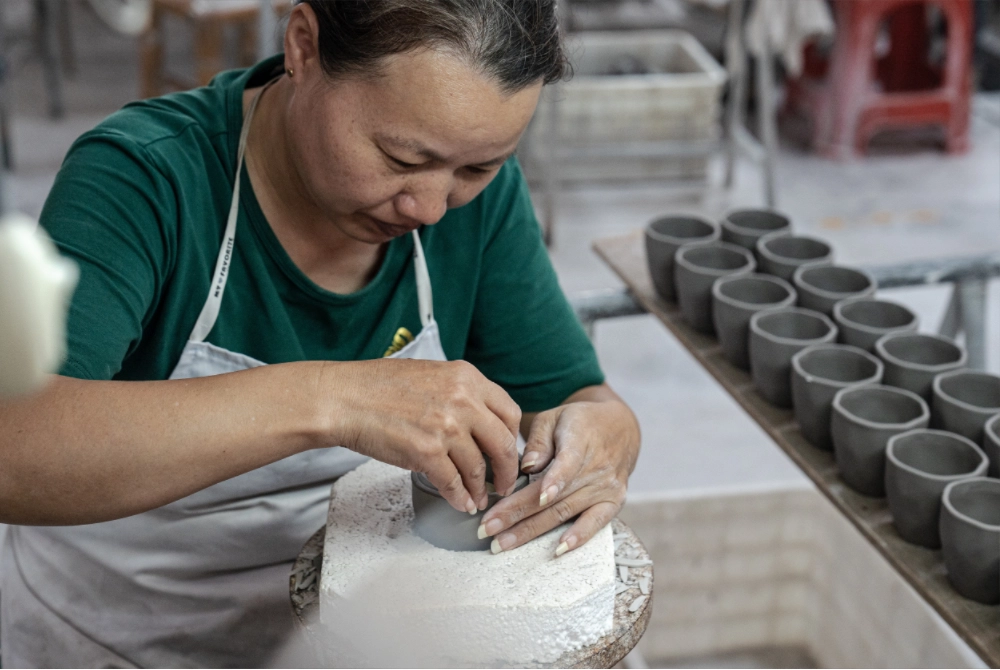


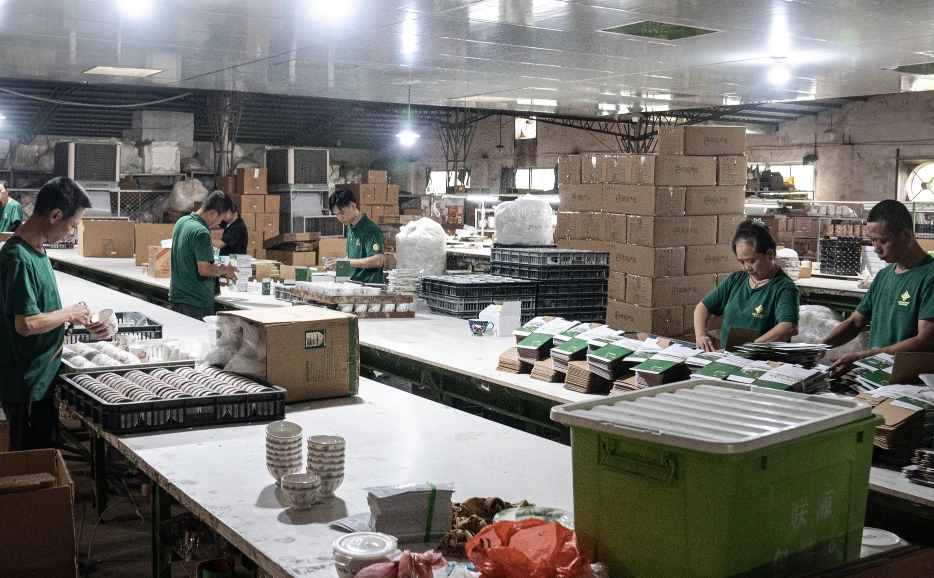
For buyers evaluating porcelain vs stoneware vs bone china, Lianyuan provides material selection guidance, OEM/ODM customization, and factory-direct wholesale supply.
Develop Your Next Dinnerware Collection with Lianyuan
Whether you are sourcing new ceramic dinnerware for retail, expanding your wholesale assortment, or creating an exclusive private-label collection, Lianyuan can help you evaluate suitable materials, decoration options, and manufacturing requirements.
Share your product concepts, reference images, target market, and estimated order quantity with Lianyuan. Contact our team to discuss your OEM/ODM project and request a factory-direct wholesale quote.